Real Life Stories: People Trafficking in Cameroon (Fund for Women in Development)
The latest in our series of partner interviews is with RoseSanjoh. Her story was compiled by Liluye staff writer Sylvia Nalubega. Rose is the President of Fund for Women in Development (FWID) whose vision is to ensure that every woman and girl child reach their boundless potential irrespective of who and where they are in Cameroon.
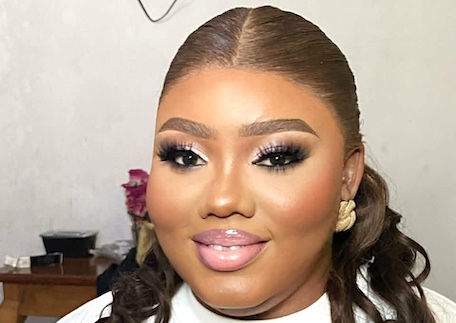
Rose Sanjoh, President of Fund for Women in Development (FWID).
What are the specific mission and goals of your organization? My organization is called the Fund for Women in Development or FWID. It’s a survivor-led organization that I founded and established after my trafficking ordeal in 2018. Our mission is to ensure that every woman and girl child reach their boundless potential irrespective of who and where they are.
It takes me back to my own personal story. I was trafficked because I was not able to achieve much back home because I had very limited resources. Women face many barriers to their greatness here. For instance, in my community, women don’t inherit property. In my family, there were only girls, and after the death of my father, there was a fight to take our family property. Unfortunately, this lack lured me into the hands of traffickers.
Through our vision, FWID aims to provide compassionate services to women and girls, especially survivors of human trafficking, like myself and survivors of gender-based violence, in a way that restores their freedom and their dignity.
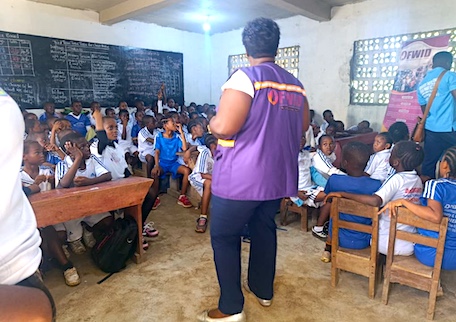
We offer psychosocial support to survivors of trafficking, protection services, water, hygiene and sanitation services, as well as education. We also do advocacy and sensitization campaigns around human trafficking and gender-based violence.
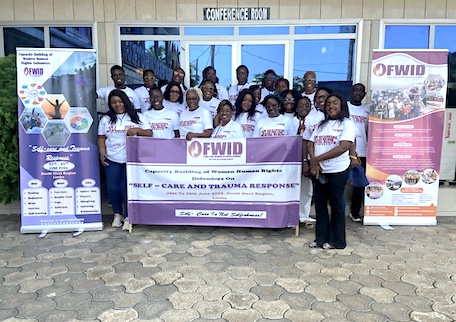
The FWID team with Women Human Rights Defenders in a self-care training, June, 2024.
How did you first get involved in being part of this work? In other words, what motivated you, or still drives you, to work on the issue of trafficking? Can you share a personal story? I want to say that aside from this work being a passion for me, it’s also a healing scheme for me as a survivor of human trafficking. In 2015, I was trafficked to the Middle East by my cousin. During that trafficking ordeal, I suffered a lot of abuse ranging from sexual to physical abuse, and most especially emotional trauma that has been with me from 2015. I’m still in the process of healing. In doing this work, it gives me satisfaction and heals me from within. It helps to know that I can help others avoid this painful situation. It’s some sort of consolation.
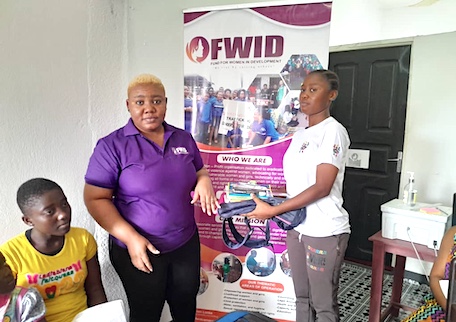
Rose offers scholarships to the under-privileged and children of survivors, August, 2024.
My family finally realized that I was trapped in a very terrible situation and they had to work very hard to ensure that I came back home alive after I had sustained a very serious head injury. However, my freedom came at the cost of $4,000. Two of my cousins, one in the United States and another in Germany, reached out to the agency that recruited me and asked how they could actually bring me home. The lady at the recruitment agency reported that she spent $4,000 to take me to Kuwait, so they had to refund her that money. But even after paying that money, it still wasn’t easy. The lady I was working for at the time refused to let me go. After a lot of back and forth, she finally released me to return back home.
What is the severity of trafficking in your area and what are the long-term implications of sex trafficking, especially on women and girls? Human trafficking is a very serious situation, and it’s on a steady rise as a result of the ongoing Anglophone crisis in Cameroon. It leads to poverty, insecurity, and unemployment in my country. Moreover, the limited opportunities especially for young girls and women makes them easy prey for traffickers. So, it’s extremely serious. In fact, every other day there are different cases of human trafficking reported both in our country and internationally.
What kind of change do you want to see as a result of your work among the survivors of trafficking, or those who are most vulnerable to it? As a survivor leader of an organization that fights human trafficking, I have supported victims of human trafficking to come back home. With funding from Vital Voices Global Partnership from 2019-2024, I was able to bring back home over 28 survivors of human trafficking, and support over 500 direct survivors of gender-based violence. We integrated them back into their families and communities while empowering them socially and economically.
I also seek justice for the victims. Perpetrators should face the law. What we want the most is to see perpetrators being punished for their crimes.
In addition, I want to see a community where women and girls are able to thrive and grow without being stigmatized or segregated because of their background or ordeal they have survived.
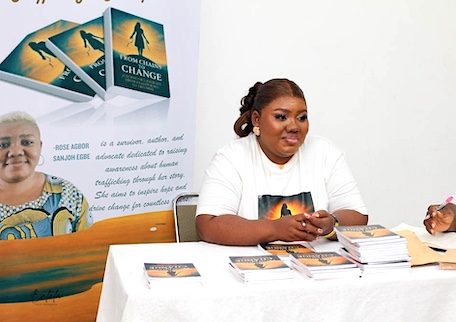
Rose at the launch of her memoir “From Chains to Change, A Survivor’s Journey from Trafficking to Triumph,” August, 2025.
What kind of support do you need for your work? FWID is always in need of support to continue our impactful and necessary work. Supporting us with funds to run our safe space is very important for survivors of human trafficking and gender-based violence. Specifically, we need material support for the safe space and funds to carry out advocacy campaigns against human trafficking.
To find out more aboutFund for Women in Development (FWID): Visit FWID on Facebook: FWID Visit FWID on LinkedIn: FWID
For more information about Liluye or to inquire about becoming a partner, please visit:www.liluye.org/contact. Or, if you are interested in donating to Liluye, please visit:www.liluye.org/donate.
Rose was interviewed by Liluye staff writer Sylvia Nalubega who also writes a blog, Sanyu Centre for Arts and Rights. Sylvia’s personal message to everyone is, “We live beyond ourselves by sharing our story to hopefully impact a person.”